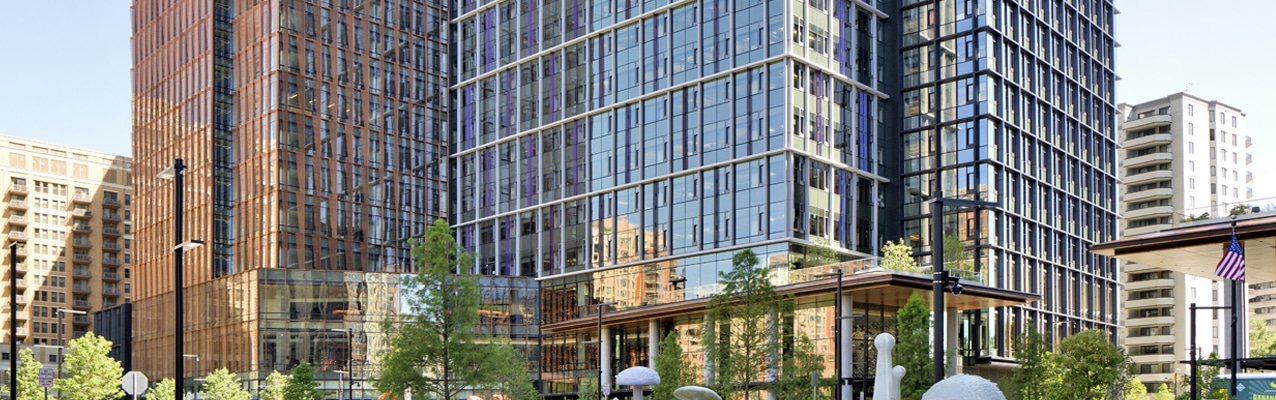
With Vice President of Products and Business Development, Marc Deschamps
Walker Glass is launching AviProtek® Turbo in response to rising demand for bird friendly glazing solutions. These days, project teams are no longer asking whether to include bird safe solutions, but how to implement them efficiently, at scale, and without compromising performance or constructability. AviProtek® Turbo was developed in direct response to these needs, building on the proven effectiveness of AviProtek® while offering a solution designed for higher-volume projects, tighter timelines, and the practical realities of today’s glass supply chain.
To help understand the development and benefits of AviProtek® Turbo glass, we spoke with Walker’s Vice President of Products and Business Development, Marc Deschamps. He took us behind the curtain to talk about what went into the development of Turbo, its unique place in the bird friendly glass market, and what’s next for the program.
What is AviProtek®Turbo?
Turbo, like other AviProtek® products, is a bird friendly glass with acid etched markers on the first surface. At this stage it’s available with three dot designs pulled from the AviProtek® pattern library, and there’s an option to include a low-e coating on surface two, à la AviProtek® E.
The improvement of the manufacturing system for this line allows us to produce more product, quickly and efficiently, in larger stock sheets sizes.
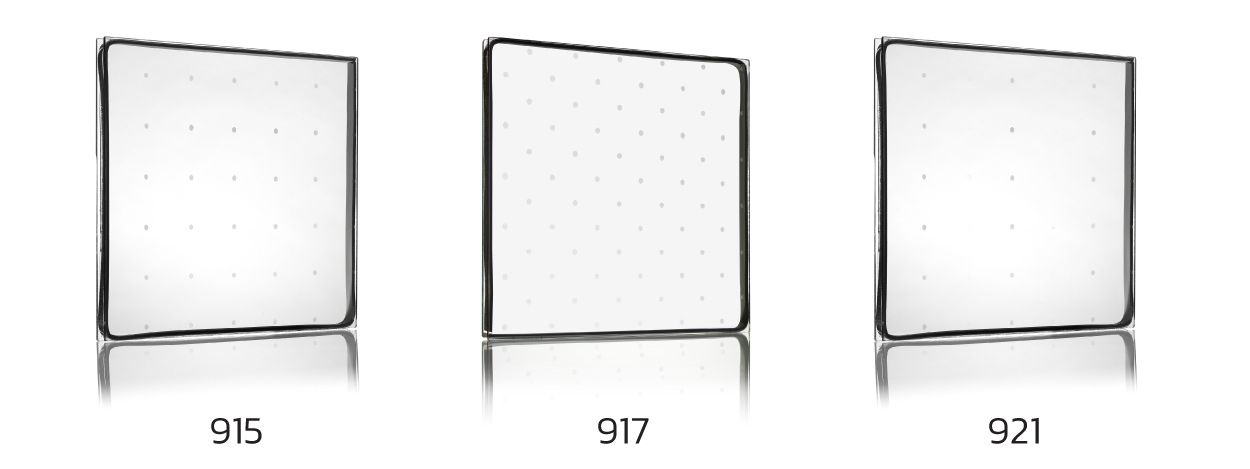
AviProtek® Turbo is currently available in patterns 915, 917 and 921, with or without low-e coatings on surface two.
How has the bird-friendly glass market evolved over the past decade?
Both in terms of demand from clients and architects, and on the supply side?
The bird-friendly glass market has changed on many levels. One of the biggest shifts has been the growth of guidelines and building codes. In the U.S. especially, more cities have adopted bird-friendly requirements – some mandatory, some voluntary – and at this point they’re fairly widespread. Projects managed through the General Services Administration now require bird-friendly glazing, which has been a major driver of demand. Canada has been a bit more consistent overall, with requirements tending to align more closely around CSA standards.
In many cases, the push starts with architects. A lot of firms now have internal policies around bird-friendly design and actively present it as a standard feature to building owners and developers. Compared to even five years ago, the architectural community is much more educated on this topic, and in geographical areas where awareness is still developing, there’s a real eagerness to learn.
At the same time, general awareness has grown. We’re seeing far more decision-makers who simply want to do the right thing. That includes colleges and universities, healthcare facilities, K-12 schools, and a lot of publicly funded or government-owned projects. Even private companies like Amazon are making ecologically responsible design a core part of their development strategy.
As demand for bird friendly glass has increased, so has the supply. When we launched AviProtek® in 2013, we were the only North American player in the bird-friendly glass space. Today, there’s more competition, along with new technologies and new approaches to manufacturing. That’s a natural evolution of the market, and it’s shifted the conversation from simply asking for bird-friendly glass to asking what works best for a specific project, timeline, and budget.
We’re definitely working with a more sophisticated, informed and competitive market compared to ten years ago.
Why was it important to develop a solution like Turbo?
For Walker, it was critical to have a higher-volume product to meet the needs of larger jobs. The market has grown and we’ve been able to penetrate that market effectively; we’re providing glass for buildings that need multiple truckloads of glass in a short span of time. It’s important for our production pace to keep up.
The other element is that the higher competition for supplying bird friendly glass means the pressure is on for shorter lead times, greater volume, and more competitive price points. By using a more efficient production process for Turbo, we’re able to offer that and stay in front of the competition
AviProtek® Turbo: Faster. Bigger. Better.
Faster production and shorter lead times.
Bigger volume and stock sheets.
Better efficiency and price points.
How does Turbo benefit fabricators and contract glaziers?
A lot of it comes down to the same things that help everyone in this supply chain: bigger volume, faster lead times and better price points. The larger sized stock sheets can also help limit waste, depending on the sizes of your openings, because you may be able to fit more pieces onto the 100″ x 144″ sheets, compared to the standard 96″ x 130″ size.

What benefits does Turbo offer to architects and designers?
We’re seeing a significant trend in the market toward larger openings. With Turbo, we’re able to go up to 100″ x 144″ stock sheets, so that’s a big plus. Another important thing to remember is that Turbo has the same depth of offering as other AviProtek® products. It’s available with all the same thicknesses, substrates, low e coatings … so you’re not losing any of those options.
Plus, of course, all the same benefits of using AviProtek® in general: reliable bird collision deterrence, compliance with bird safety regulations, potential for LEED® credits or other green building system credits, high visibility and VLT, and energy efficiency if it’s combined with a low-e coating on surface two.
Turbo has the same depth of offering as other AviProtek® products. It’s available with all the same thicknesses, substrates, and low-e coatings, so you’re not losing any of those options.
What’s the role of classic AviProtek® glass now that Turbo is available?
It’s important to be flexible in your offering. Not all projects are suited to the larger order quantities required with Turbo, and of course not all AviProtek® patterns are available in Turbo yet. Nonetheless, having that variety of patterns available is important to the AviProtek® program. So Turbo is certainly a critical add-on to the program, but it doesn’t replace what’s been offered before.
At a Glance: Turbo and Classic AviProtek®
| Classic AviProtek® | AviProtek® Turbo | |
|---|---|---|
| Standard size | 96” x 130” | 100” x 144” |
| Patterns available | All AviProtek® patterns (dots, lines, free-form) | 915, 917 and 921 (dot patterns) |
| Low e coating | Available on surface 2 (AviProtek® E) | Optional on surface 2 |
| Minimum order quantity per pattern | 1 block / 4,000 lb | 3 blocks / 12,000 lb |
For more information about the Turbo offering, please visit the AviProtek® Turbo product page or reach out to your Architectural Manager or Sales Representative. Our team is here to help.
What’s next for the program?
Definitely adding more pattern options. We started with dot patterns 915, 917 and 921 because these are extremely popular options that meet a lot of needs. They meet all the bird safe requirements in North America, and the patterns have low surface coverage.
Down the line, we’re looking at adding variations on our current patterns and ready to look at others as well. We are not going to stand still. We will continue to evolve along with the marker.
AviProtek® Turbo reflects the direction the bird-friendly glass market is heading, toward solutions that are not only effective, but also scalable, efficient, and easier to integrate into large-scale projects. By combining proven bird-friendly performance with a production approach suited to higher volumes and competitive lead times, AviProtek® Turbo offers a practical, forward-looking option for projects that need to balance performance, availability, and real-world installation demands.